
Community Land Trusts in Action: Three Indiana Models, One Shared Mission
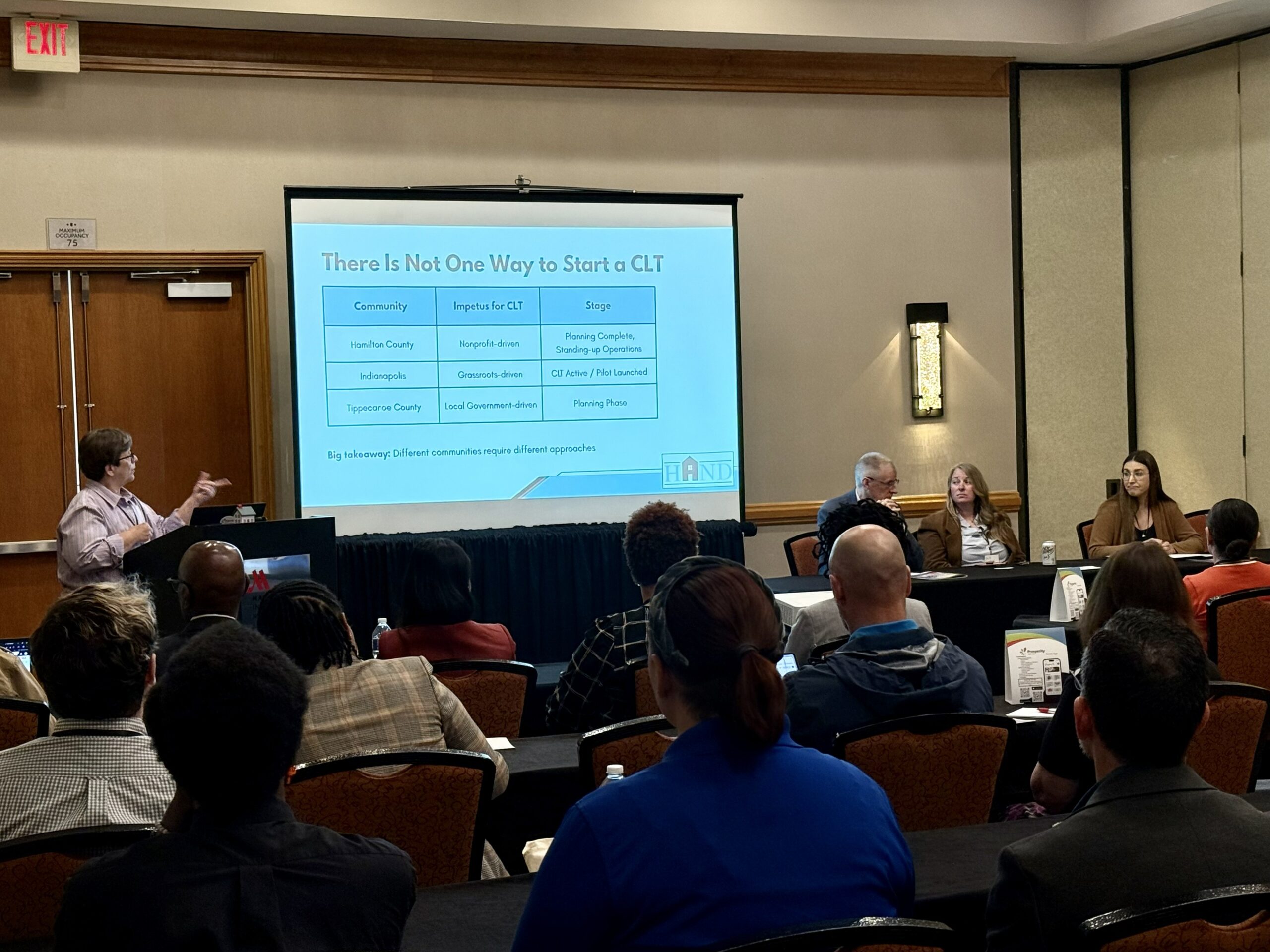
Earlier this month, HAND’s Executive Director, Andrea Davis, moderated a panel discussion on Community Land Trusts (CLTs) at the 2026 Prosperity Indiana Summit, bringing together leaders from Indianapolis, Hamilton County, and Tippecanoe County to explore how different Indiana communities are approaching long-term housing affordability.
The panel featured:
- Katie Whitley, Indianapolis Community Land Trust
- Michael Osborne, i3 Community Housing Solutions and consultant to the Hamilton County Community Land Trust
- Kara Boyles, City of Lafayette and Tippecanoe County Community Land Trust effort
For HAND, the conversation represented an important milestone in work that has been growing through the Hamilton County Housing Collaborative (HCHC). One of the first major priorities identified through the collaborative was exploring the potential for a Community Land Trust in Hamilton County as housing costs continued to rise and attainable homeownership opportunities became increasingly limited.
The session highlighted that while every community is approaching the model differently, many are arriving at the same question: how do we preserve long-term affordability in markets where housing prices continue to outpace wages?
What Is a Community Land Trust?
One of the biggest themes throughout the conversation was clarifying what a CLT actually is. This video from Grounded Solutions Network was shown to level set the group in the definition of a CLT.
A Community Land Trust is not a type of housing development. It is an ownership and stewardship model designed to preserve affordability over time. In a CLT, the homeowner owns the home itself, while the land underneath remains owned by the trust. That structure allows the home to remain affordable for future buyers even as property values rise.
The panel also discussed how CLTs can help reduce some of the stigma often associated with affordable housing. Homes within a land trust can look like any other home in the neighborhood. Affordability is not visually concentrated into one development or separated from the surrounding community.
As Andrea shared during the session, “You don’t know how your neighbor paid for their home, and no one would know how a CLT homeowner did either.”
Different Communities, Different Approaches
One of the most valuable aspects of the session was hearing how differently communities are implementing the model.
Indianapolis launched its CLT through years of grassroots organizing and community engagement focused heavily on displacement and barriers to homeownership for Black and brown households. Their first pilot program helped families earning below 60% of Area Median Income purchase homes on the open market through a shared equity structure.
Tippecanoe County is developing a government-supported model focused on preserving public investment long-term. Local leaders discussed concerns around affordable housing subsidies eventually expiring and homes returning to market-rate pricing after affordability periods end.
Hamilton County’s effort has developed through nonprofit leadership, philanthropy, regional collaboration, and technical expertise. The conversation reflected the unique challenges facing suburban communities where rising home prices continue to push attainable homeownership further out of reach for many working households.
One recurring theme throughout the panel was that there is no “one-size-fits-all” CLT model. Each community must determine what structure, partnerships, and policies best fit its local market and goals.
Balancing Wealth-Building and Long-Term Affordability
The panel also explored one of the most important and complex parts of the CLT model: balancing homeowner wealth-building with permanent affordability.
Unlike traditional homeownership, CLTs use resale formulas that allow homeowners to build equity while also preserving affordability for future buyers. Panelists discussed how every CLT must determine where that balance should fall based on community priorities and long-term sustainability.
The discussion reinforced that these decisions are not just technical. They are policy decisions that shape who the CLT serves and how affordability is preserved over time.
The Technical Side Matters
While the mission behind CLTs is easy to connect with, panelists emphasized that building a successful land trust requires significant technical planning and long-term stewardship.
Topics discussed included:
- Property taxes
- Mortgage lender partnerships
- Repair reserve funds
- Ground lease structures
- Homeowner education
- Governance models
- Funding sustainability
- Long-term stewardship responsibilities
One major takeaway was that CLTs are not a quick fix. They require patient planning, strong partnerships, ongoing funding, and community trust to succeed long-term.
Looking Ahead
The session generated strong audience engagement and reinforced growing statewide interest in Community Land Trusts as one tool communities can use to create lasting housing stability and attainable homeownership opportunities.
For HAND and the Hamilton County Housing Collaborative, the conversation was another reminder that communities across Indiana are searching for long-term housing solutions that work within their local context while helping ensure more people can continue to live and thrive in the communities they call home.